

What Does "Consent" Mean in Creative Work? Thinking About How to Create a "Safe and Secure" Environment with Intimacy Coordinator Chiho Asada
Hello, everyone.
This is "koko no me," a media platform managed by Creative Studio koko.
We create spaces for people involved in "making" and "delivering" to explore paths toward better social and professional environments, and to empower one another through expression, planning, production, and dissemination. Our theme is "What we want to talk about right now." By bringing together topics that we—as those involved in creative production—are personally curious about regarding the creative process, ways of working, and how we engage with society, we aim to connect with new perspectives through exposure to different knowledge and ideas.
This time, following the Upper House election held on July 20, we wanted to think together with you all about what we can do moving forward, so we held "Politics We Need to Think About After the Election: Our Action Meeting" on August 1, 2025. We are pleased to share a report on the event!
Thinking About "Consent" in Creative Workplaces: How Do We Build Safety and Security?
With the expansion of the #MeToo movement that began in the United States in 2017, practices that had been considered "the norm" on the sets of movies, dramas, and other creative projects were exposed in Japan as well for having harmed the dignity of performers and other individuals involved.

©︎Jeanne Menjoulet
To realize a safer and more secure production environment for performers and staff, the process of "consent" is essential.
However, what exactly does "obtaining consent" mean? In what scenes is it necessary? At what stage can we say "consent has been obtained"? Providing clear answers to these questions is not easy, and many production sites are still struggling with these challenges.
In response to this current situation, at our kokonome event held on February 21, 2025, we welcomed Chiho Asada, a leading Intimacy Coordinator (IC), as our guest to discuss the following three main topics:
1. The role of an IC / What are intimacy scenes?
2. What is the "consent" required in creative workplaces?
3. Why an IC is essential for creating a safe and secure workplace
The talk focused on these three key points.
Chiho Asada

Profile: Graduated from the University of North Carolina School of the Arts in 1998. Became deeply involved in the film industry after serving as a jury interpreter at the Tokyo International Film Festival in 2003. Since then, she has participated in film sets as an interpreter, from project planning and filming for Japanese-American co-productions to premiere screenings. She has worked as an on-set interpreter for directors and as a stage interpreter, bridging the gap between English-speaking directors, choreographers, and dancers and their Japanese counterparts. In 2020, she completed the intimacy coordinator training program at the Intimacy Professionals Association. She participated in the Netflix film "Her" as Japan's first intimacy coordinator and has since worked on numerous films and dramas. Notable works include the Netflix series "The Drops of God," Amazon Prime's "1122: For a Happy Marriage," and the film "Monster." She is also involved in the 2025 NHK Taiga drama "Berabou."
 ̄ ̄ ̄ ̄ ̄ ̄ ̄ ̄ ̄ ̄ ̄ ̄ ̄ ̄ ̄ ̄ ̄ ̄ ̄ ̄ ̄ ̄ ̄ ̄ ̄ ̄ ̄ ̄ ̄ ̄ ̄ ̄ ̄ ̄ ̄ ̄ ̄ ̄ ̄ ̄ ̄ ̄ ̄ ̄ ̄ ̄ ̄ ̄ ̄ ̄ ̄ ̄ ̄ ̄ ̄ ̄ ̄ ̄ ̄
To begin, she gave an overview of the role of an IC and what constitutes an intimacy scene, incorporating examples from the U.S., where the practice of hiring ICs first began.
Facing the Set Without Rules as Japan's First Intimacy Coordinator
Asada: An IC is a staff member who coordinates scenes so that actors can perform physically and mentally in a safe and secure manner when an intimacy scene* is present in film or other productions, while also maximizing the realization of the director's vision. I am not a supervisor; I always strive to participate in a project as a member of the production staff.
In the U.S., where the IC role was born, there is a film actors' union called SAG-AFTRA, which has very strict rules regarding the filming of intimacy scenes. However, because Japan has no such rules at all, it is difficult to implement them only for intimacy scenes when the general working environment and conditions for actors and staff remain unprotected. Therefore, I have been working as an IC by utilizing a set of minimum standards that I established myself.
*Intimacy Scene: Refers to scenes involving nudity, simulated sexual acts, or sexual depictions.
In the U.S., it is said that in addition to performance contracts, consent forms are prepared for performers who are involved in works containing intimacy scenes.
 ̄ ̄ ̄ ̄ ̄ ̄ ̄ ̄ ̄ ̄ ̄ ̄ ̄ ̄ ̄ ̄ ̄ ̄ ̄ ̄ ̄ ̄ ̄ ̄ ̄ ̄ ̄ ̄ ̄ ̄ ̄ ̄ ̄ ̄ ̄ ̄ ̄ ̄ ̄ ̄ ̄ ̄ ̄ ̄ ̄ ̄ ̄ ̄ ̄
Summary of Parts of the U.S. Consent Form Regarding Intimacy Scenes
✔︎ Detailed description of what the performer is consenting to.
✔︎ Consent can be withdrawn at any time before filming, even after it has been finalized.
✔︎ Within the scope of consent, a body double can be used if the actor chooses to decline a specific act.
✔︎ Once consent is given, it cannot be revoked for "already filmed" scenes.
 ̄ ̄ ̄ ̄ ̄ ̄ ̄ ̄ ̄ ̄ ̄ ̄ ̄ ̄ ̄ ̄ ̄ ̄ ̄ ̄ ̄ ̄ ̄ ̄ ̄ ̄ ̄ ̄ ̄ ̄ ̄ ̄ ̄ ̄ ̄ ̄ ̄ ̄ ̄ ̄ ̄ ̄ ̄ ̄ ̄ ̄ ̄ ̄ ̄
Ms. Asada began her career as an IC in 2020. While she sees gradual changes in the industry, the reality is that it cannot be said she is welcomed by all productions and staff. Amidst lingering issues like tight schedules and harsh labor conditions, she often faces individuals who believe "ICs are unnecessary" or receives skeptical reactions even when she joins a set. Despite this, she continues to stand on set, fueled by the desire to help protect the dignity and safety of actors, at least during intimacy scenes.

The Complex Process of "Consent" — Everyone’s Definition of "Okay" is Different.
That’s Why We Carefully Approach Each Person and Each Scene
After deepening our understanding of the basic role of an IC, we moved to the main topic of "consent," starting with the process.
Asada: I usually get involved in a production once the script is somewhat finalized and the pre-production stage—such as location scouting and casting*—is underway. I start by reading the script and flagging parts that might be intimacy scenes. Then, I confirm specifically with the director, "What kind of depiction do you have in mind for this scene?"
From there, I meet with each actor individually to begin the process of obtaining consent for the intimacy scene. Here, I don't just look for a clear "Yes" or "No," but carefully listen to specific wishes and opinions, such as "I can do this much, but not that." Depending on the content, I might report back to the director that "everything is OK," or I might report that "this part needs adjustment." By the day of the shoot, I ensure that both the director and the actor are on the same page.
Regarding costumes, I don't usually attend fittings for standard attire, but if it involves underwear or something related to intimacy, I participate. I am always present on the day of filming for intimacy scenes.
*Pre-production draft: An early version of the script created before the final shooting script, outlining the story structure and character settings.
So, in what scenes are ICs actually needed? Even if we use the word "nudity" or "sexual depiction," individual perceptions and expectations vary. We asked about specific situations where an IC is needed.

Asada: For me, I make sure to confirm everything in advance, even for scenes involving holding hands, putting an arm around someone, or hugging. However, such confirmation isn't always sought on every set, and there are times when an IC cannot be involved due to budget constraints. Still, I believe the process of confirming consent in some form is important. Past experience has shown me that there are a certain number of actors who, even in scenes without kissing or sexual depictions, think, "I'll do it if I'm not asked, but I really don't want to hold hands."
If asked where the confirmation of consent should begin, I think it starts at the point where one might feel even the slightest hesitation internally, thinking, "Is this okay?"
It became clear that carefully building the process of consent is directly linked to creating an environment where actors can perform with peace of mind, especially given that actors meeting for the first time often have to perform intimacy scenes.
Toward the end of the talk, we discussed what changes these practices are bringing to the industry and why ICs are needed now.
Protecting Actors' Dignity and the Work Through "Choice"
Asada: Halting production costs a massive amount of money, but in the nearly 60 various projects I've been involved in, not once has an actor revoked their consent on the day of the shoot.
For example, in the case of a streaming drama series, filming might last more than half a year. Even if we have a consent meeting before the start of filming, the intimacy scene might be five months later. Because of that, I sometimes receive concerns from actors, such as, "Is this intimacy scene really necessary for the story?" or because of their changing relationship with their co-star or director, they might reach out to say, "I consented before, but I want to rethink it." However, as long as such concerns are raised in advance, I believe they can be resolved before the shooting day, so the filming itself never actually has to stop.

Asada: I believe that until now, Japanese sets haven't provided actors with the opportunity to choose how they engage with intimacy scenes. Through my dialogues with many actors, I've realized that when they are given choices and choose for themselves, they become able to face intimacy scenes with a strong sense of responsibility for those choices.
The power imbalance between production (directors/producers) and actors is significant in the current industry. In this context, having an IC on set provides an opportunity for actors to verify or rethink their feelings. I was struck by the importance of having an IC present as a professional who "supports the process of verifying one's own feelings." I also learned that carefully confirming consent through IC intervention not only supports the actors' peace of mind but also protects the work as a whole for the production side by reducing litigation risks and ensuring smoother filming.
🗣️What Can We Do to Create Safe and Secure Workplaces? The Circle of Solidarity Born from Dialogue
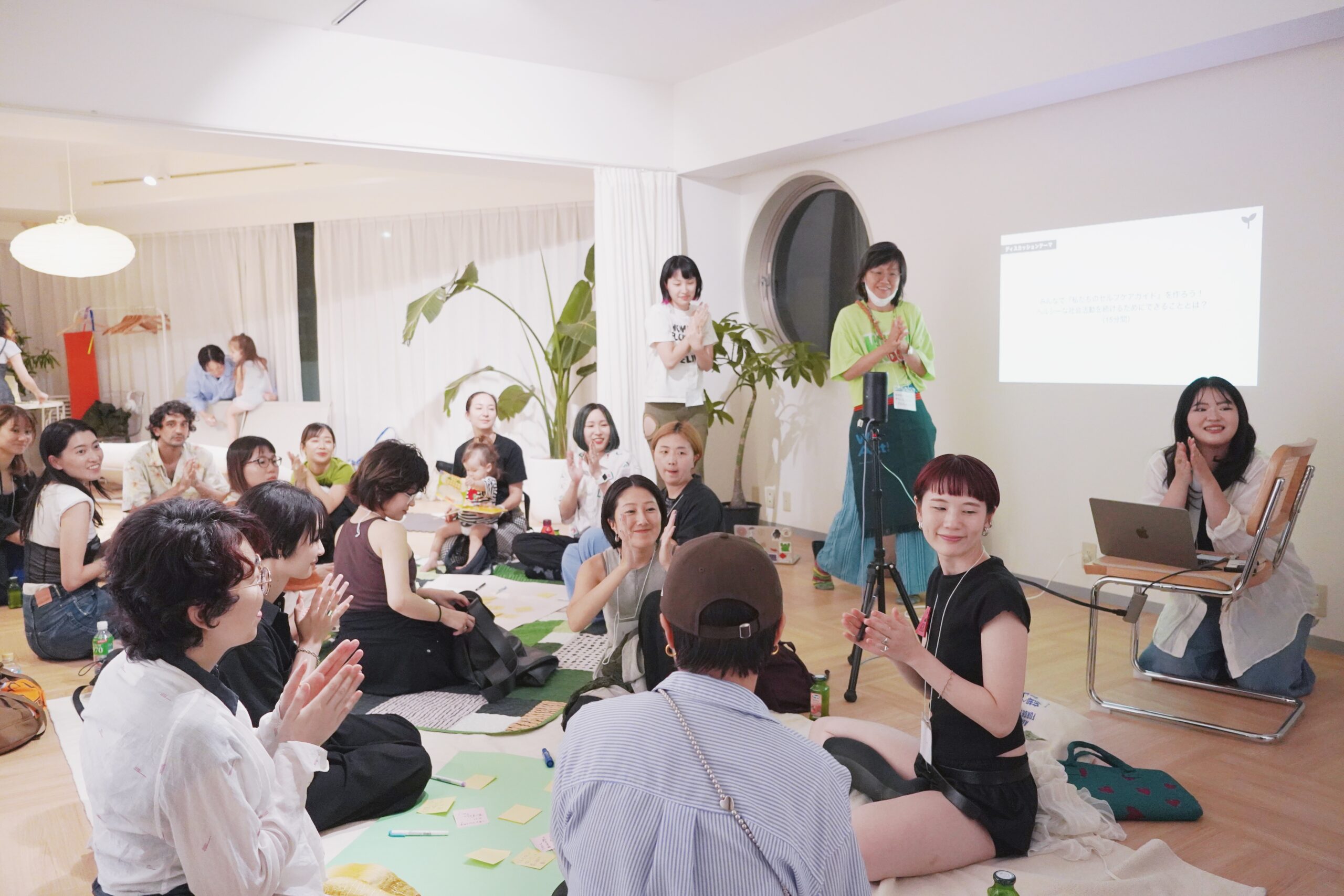
In the second half of the event, the 24 participants split into groups to discuss questions assigned to each group based on three themes:
A. How to secure the budget
B. How to negotiate for introduction
C. What can be done to increase allies


A. How to secure a budget?
To get a budget, we need to explain the physical and practical benefits of bringing in an IC. Through today's talk, I felt that an IC helps not just with human rights, but also with risk hedging and improving the quality of expression. I think we can explain to budget decision-makers that it helps improve the work's quality, ensures everyone is on board, and prevents potential controversies after release. The Japanese film industry has limited budgets, so it's hard to find money midway. It's safest to include it in the initial quote. When the director, screenwriter, and producer are working together, we should decide on the plan and budget under the premise that "an IC is necessary." Consent isn't something confirmed on the day; it's born from being there for an actor's anxieties and feelings, so the production side should be sincere about including an IC. The industry is full of "data on failures," which is why it's crucial that we demonstrate the right attitude.
B. How to negotiate for introduction?
There's an atmosphere where, as a young person, it's hard to ask for an IC out of fear of being blacklisted or labeled as a difficult actor or staff member. That's why we need opportunities for the whole industry to learn. If staff members like makeup artists, costume designers, and technical crew—rather than just producers and directors—understand the significance of an IC, they can support the push for introduction. Building solidarity is the key to negotiating with those in power.
C. What can we do to make allies?
Events like today provide insights. By setting up opportunities for meetings involving ICs for every project, we can involve not only the upper management but also staff closer to the actors, like assistants, to grow our circle. Also, as a goal for our discussion team this year, we decided that for any project with intimacy scenes, each of us will raise our hand at least once and speak up in front of the staff, saying, "Let's treat the filming of this scene with care." I believe if someone speaks up, the set can change.
We were joined by film directors, producers, and professionals working in television and advertising. Very practical ideas emerged through our discussion.
At the end of the event, Ms. Asada also shared comments based on everyone's input.
As a Presence for Everyone Involved on Set
Asada: Throughout today's talk, I think the words I used most were "director," "producer," and "actor," but I feel that an IC is also a presence for the staff.
Many staff members have likely stood on set feeling anxious that a scene was proceeding without the actor's full consent. In fact, while working as an IC, I have received many consultations about regrets like "I couldn't stop it at that time" or "What should I have done?"
Film and video works are created by everyone, including the staff, not just the actors. I believe that an IC is not just for actors, but for everyone involved on set. Sometimes, assistant directors or hair and makeup artists who have experienced a good set invite me to their next project, and I feel that as more people experience production sites with an IC, solidarity is born.


Because there is "Consent," there is expression that can be made.
The role of an IC is not to limit expression. Rather, by building a foundation where all parties feel safe, it becomes possible to carefully engage with expressions that were previously avoided due to anxiety or ambiguity.
Instead of "increasing what we can't do," it's about "realizing expression in a way that everyone can agree upon, while respecting the passion for each work and the dignity of every individual involved." Through this event, I felt that this is the value an IC brings to the set, and it leads to broadening the scope of creative production.
This event was filled with hints and perspectives on how we can create an environment where everyone involved in production feels safe and secure.
Start by talking about it. From there, a set where people can participate with peace of mind should begin to emerge, little by little. I believe that the insights gained from the dialogue today will be a firm step toward moving the next production.
At kokonome, we will continue to face the themes you all at Creative Studio koko "want to know about," "want to think about," and "want to talk about," and create a space for us to walk together while learning through dialogue.

Click here for event-related content
On our koko no me Instagram, we have published post-event interview content with Ms. Nojo and other participants.
Check it out here if you're interested!
-Follow koko no me ♫-
"koko no me" is a media platform managed by Creative Studio koko. What we value is creating a space where every individual involved in "making" and "delivering" can deepen their thoughts and discuss with peace of mind. While exchanging different ideas, perspectives, and emotions, we explore the path toward the future we want to create, starting from "here and now."
Our theme is "#What we want to talk about right now." We create opportunities to talk and think in our own words about what is happening on creative sets, the background of planning and production, working environments, and forms of expression that we explore while engaging with society. Through events with guests and articles, we will deliver a step toward choosing our own future forms of expression and work styles.
Follow us on Instagram and we would be happy to have you as part of our community!
Click here if you would like to receive event-related emails
Text : Akane Takayama
Edit: Akane Takayama, Ai Tomita